



 Newsletter
 Search
Financials Are Powering The Benchmarks As Markets Stay Flat
The Sensex snapped its three-day winning streak following the tariff deal relief rally
On Episode 796 of The Core Report, financial journalist Govindraj Ethiraj talks to Prabhu Dhamodharan, Convenor of the Indian Texpreneurs Federation as well as Priyam Gandhi-Mody, Executive Director, Future Economic Cooperation Council (FECC).
SHOW NOTES
(00:00) Stories of the Day
(01:00) Financials are powering the benchmarks as markets stay flat
(03:27) Indigo says it has complied with norms it was supposed to in December
(04:21) Indian negotiators score fresh wins in evolving India-US tariff deal
(05:35) A deep dive into cotton economics behind the Bangladesh reciprocal deal for garment exporters and the India connect
(19:40) Not just Delhi, Mumbai has several interesting conferences lined up next week too
Register for India Finance and Innovation Forum 2026
NOTE: This transcript contains the host's monologue and includes interview transcripts by a machine. Human eyes have gone through the script but there might still be errors in some of the text, so please refer to the audio in case you need to clarify any part. If you want to get in touch regarding any feedback, you can drop us a message on [email protected].
—
Good morning, it's Thursday the 12th of February and this is Govindraj Ethiraj broadcasting and streaming weekdays from Mumbai, India's financial capital.
Our top stories and themes…
Financials are powering the benchmarks as markets stay flat on Wednesday.
Indigo says it's complied with norms for flight duty time limits it was supposed to do in December last year.
Indian negotiators score fresh wins in the evolving India-US tariff deal.
A deep dive into cotton economics behind the Bangladesh reciprocal deal for garment exporters from there and the India connect.
And it's not just Delhi, Mumbai has several interesting conferences lined up next week too and hotel fares are much lower.
Flat Markets
Financials continue to be the big draw as investors both domestic portfolio as well as international strategic as we've been reporting here continue to buy into the banking and finance opportunity that India offers more than any other sectors.
This is also demonstrated by the stock price of State Bank of India which rose 3% on Wednesday and overtook Tata consultancy services or TCS to become the fourth largest company by market capitalisation. Otherwise it was a choppy session with the indices rising and dipping below water levels with the Sensex snapping its three-day winning streak following the tariff deal relief rally. At close the Sensex was down 40 points to 84,233 while the NSE Nifty 50 was up 18 points to 25,953.
Yes this was one of those days where both indices moved in opposite directions. In the broader markets the NSE mid cap 100 and small cap indices were both higher though up very marginally at 0.03 and 0.02 percent each. Gold prices were up thanks to a weaker dollar and lower treasury yields in the United States even as investors weighted key US jobs data later on Wednesday.
Spot gold was at about $5,074 per ounce and futures were at about $5,098 per ounce. Remember the high was about $5,600 in recent weeks. The rupee slipped in late trading on Wednesday as dollar bids from foreign banks picked up according to a Reuters report which quoted the rupee closing at 90 rupees 70 paise down slightly from its close in the previous session and perhaps the first visible impact on commodity prices here as the US-India tariff deal begins to kick in.
Soybean and corn prices have fallen by 10 and 4 percent respectively since the framework was announced last week. According to a Reuters report the joint statement between the two countries had said that India had agreed to allow duty-free imports of soy oil and distillers dried grains with solubles or DDGS which is a corn-based ethanol by-product used as cattle feed. Experts told Reuters that although allowing US DDGS imports is weighing on prices the short-term impact is likely to be limited.
Indigo Complies
Indigo has informed the Director General of Civil Aviation that it's fully prepared to comply with statutory provisions and implement the approved flight duty time limitation scheme from February 11th following the expiry of a one-time temporary exemption granted after its operational disruption in December.
The DGCA said that Indigo has further stated that all necessary operational rostering and monitoring arrangements are being put into place to ensure full compliance with the approved scheme. According to a report in the Business Standard the DGCA said Indigo was granted a one-time temporary exemption on December 5th. To give you one example of these new FDTL rules if a pilot's duty period touches anytime between midnight and 6 a.m it's treated as night duty once the duty is classified as night duty stricter fatigue limits automatically apply.
The Evolving Deal
There has been fresh action in the India-US tariff negotiations. The White House revised its fact sheet on the US-India trade agreement to adjust language around agricultural goods adding to confusion about the deal already raised by farmer groups according to a Bloomberg report.
In a revised statement the US removed a reference to pulses a staple food in India that includes lentils and chickpeas and changed some phrasing around India's offer to buy more American goods and that phrasing change or shift is important and I'll come to that. An earlier version on Monday released by the White House said India would eliminate or reduce tariffs on a wide range of US food and agricultural products including some pulses. In the revised fact sheet it's dropped a reference to buying agricultural goods as part of its 500 billion dollar purchase plan.
Moreover on Monday it had said India had committed to purchase American energy. Now the document says it intends to make those purchases and dropping the reference to agricultural goods. Now the difference between committing and intending to is obviously quite large because India will try its best to meet that target but is not bound by it and obviously should not as things stand invite any punitive response if that target were not met.
—
Meanwhile the United States Bangladesh joint statement of 9th Feb said US will cut its reciprocal tariff on Bangladeshi goods to 19 percent and offer zero reciprocal tariff on garments made using US origin cotton and man-made fibres. A note from the global trade research initiative from Delhi has said that a Bangladeshi garment that usually faces a 12 percent US most favoured nation or MFN tariff would attract a total duty of 31 percent that's 12 percent MFN plus 19 percent reciprocal that's for Bangladesh. India remember has 18 according to that report.
Now for India the comparable total will be 30 percent 12 percent MFN plus 18 percent reciprocal but Bangladeshi garments if made with US fibres would avoid the reciprocal duty paying just the 12 percent MFN tariff but this will have limited impact. The note from GTRI has argued for the In 2024 Bangladesh exported about 51 billion dollars worth of garments globally much higher than India's 16.3 billion dollars over 63 percent or 32 billion of this went to the European Union duty-free about 7.4 billion went to the United States where Bangladeshi garments have faced an average MFN tariff or most favoured nation tariff of about 12 percent. Now because the EU and not US is Bangladesh's main market its government supply chains are built to serve European buyers and unlikely to change to meet conditional US sourcing rules.
Now all of this has relevance to India as well and we'll come to that. Bangladesh's garment industry depends heavily on imported textile inputs for making garments. Remember if you import cotton then you have to spin it into yarn convert it into fabric before obviously making garments for which Bangladesh does not have enough capacity and once again more on that shortly.
Bangladesh's GTRI in 2024 imported about 16 billion dollars of fibre yarn and fabric. China supplied about 9 billion India 3 billion and the US about 274 million only. On the other hand Bangladesh imported about two and a half billion dollars of cotton fibre mostly from India 650 million Brazil 604 million with US cotton accounting only for 255 million and Brazil is important in this entire equation and we'll come to that too.
We spoke of cotton fibre and when it comes to cotton yarn Bangladesh imported about 1.8 billion dollars of which India supplied 1.6 billion. So for fabric which is the most important direct input for making garments China is the dominant player says the GTRI note and high share of yarn and fabrics as inputs for making garments compared to fibre show that an estimated less than one-third of Bangladesh's garments are made starting from fibre and most are made using imported yarn and fabric not raw fibre. So put differently the US supplies Bangladesh almost entirely with raw cotton and only in limited quantities while India and China supply the yarn and fabric that directly keep the garment factories running.
So to qualify for those zero tariffs Bangladesh would have to replace long established supplies and invest afresh in new spinning and fabric processing capacity which it does not have. So I reached out to Prabhu Dhamodharan, president of the Indian Texpreneurs Federation in Coimbatore which represents about 450 companies including spinning and apparel companies and I began by asking him to walk us through the economics of cotton imports into Bangladesh and then how to view it from an India lens.
INTERVIEW TRANSCRIPT
Prabhu Dhamodharan: The Bangladesh exports around 38 to 40 billion dollar of garments an year and out of that European Union have major share and Bangladesh exports around 20 percent of the total exports to US. Now they got this relief this is the news and also the very important point what the news flow is coming is it is kind of a national level quota swap that means they buy cotton and equivalent quantum of the garments they will get duty free. It is not product by product that is what we got the news recently.
The news and also the flow of information is changing day by day we need to verify I want to alert that number one. Number two even in that such case it's not an easy game to play definitely Bangladesh got this an advantage in their favour and they will try to utilise any industry or any country will try to utilise up to maximum at the same time they have their own disadvantages in the ecosystem. For example their spinning industry is struggling even lot of public news in the last few months almost 30 to 40 percent of the in their total capacity of spindles are closed due to higher energy cost and lack of competitiveness.
Now the spinning industry after covid dramatically technology improved every 10-15 years we used to see such kind of a shift. Now the dramatic improvement in technology bringing the cost of production lower and India versus Bangladesh spinning it's not their core business so the naturally the lack of modernisation so many things disturb the ecosystem. They are marginal player in yarn and fabric segment their dependency on India, China and Vietnam is much more higher than any other country.
So naturally they buy lot of products from these countries to make garments even the US cotton comes they don't have a major capacity to spin major capacity to make fabric to make it as a game changer. At the same time structurally they may try to do that. What kind of an impact India can view this number one in the reciprocal tariff agreement in general if the US content is 20% if we use raw material the 20% is eligible for duty-free access.
This is the formula US applies to all products across the nations and if that is a 100% US origin product naturally they will get concession. We don't know whether India got such kind of a deal because you know slowly only the things are coming out. If that is the case India will play this game better than any other country because we can easily spin that cotton we have a robust spinning capacity even we have excess spinning capacity in India and we know how to run US cotton for a very long period of time our home textile players used to import the US cotton and we have a sizable fabric capacity our weaving sector modernisation rapid modernisation is happening this year 6,000 7,000 crore worth of textile advanced weaving machines came into India. So we can easily play this game both in knitwear and apparel segment so we are confident our policymakers also will try to utilise this as an opportunity because US stands slowly changing towards securing their own interests.
What is their interest in this particular subject there is an interesting element. China was the major buyer for US cotton now almost they drop to a single digit they are not buying at all. China completely shifted to Brazil instead of US.
So US need India, US need Bangladesh, US need Vietnam only five six major countries large capacity in spinning other than China. So US cotton need a market so if we apply our mind and ask the similar concession definitely they will consider and I don't know whether already the such kind of clauses are there in the agreement even if it is not there it is right time to ask because US cotton they need to sell anywhere that is where they are playing or they are strategically doing this kind of a national swap agreement with Bangladesh because China stopped buying from them and even the whatever the trade deal happened with between China and US only soya bean kind of things are in place and cotton nowhere mentioned. As of now Brazil is the largest exporter of cotton to China.
China used to buy 35 to 40 percent of the US cotton now it's came down to below 5 percent. So it is an opportunity for us if we play our cards right.
Govindraj Ethiraj: Right and you said that we have been importing and continuing to import cotton from the US and if reciprocal tariff on that particular account was possible then we should also benefit but what could be the amount roughly as in in terms of let's say our total India's total government exposed to the US what could be the total value of cotton coming in our ability to convert that into yarn use it to manufacture ready-made garments export it.
Prabhu Dhamodharan: Actually we produce 300 320 bells of lakh bells of cotton in India and always we import 20-30 lakh bells because of some specialised varieties or some price advantages sometimes we export 30 lakh bells also per year. Very importantly our export of all cotton all the export economy like the home textile or apparel any product it's all cotton dominant. We export majority cotton not mmf.
Europe for example US we export around 5 billion dollar of apparel and 2.5 billion dollar of home textiles. In this majority maybe we can say 80 percent 70 percent will be cotton products and your question of how much cotton we import it depends on prices. There very very importantly one catch point is here India impose import duty on cotton from all countries and last six months back because of the US challenges tariff challenges government withdrawn that and for six months period India imported considerable amount of cotton.
Now the duty in reintroduced once again from January that may be a hindering factor so for US cotton we need to talk with the government of USA to have a similar kind of agreement with Bangladesh. We need to remove imported duty on cotton so that the level playing field will come we can freely compete with the rest of the world. But buying US cotton price challenges that is all apart from import duty US cotton comfortably we can buy there is no big challenge for us.
Govindraj Ethiraj: And you're saying we're doing that even now and I'm assuming but if even if there is an import duty it will not apply to imports coming from the US as part of the zero percent reciprocal right?
Prabhu Dhamodharan: As of now no clarity on that we expect that should be zero if that is zero and it will be a game changer for us.
Govindraj Ethiraj: Okay broader question given the India US tariff deal as we know it right now how is it looking for the industry at least from your vantage point in Coimbatore?
Prabhu Dhamodharan: Generally big lesson from this tariff episode if you closely watch China Bangladesh anywhere the very important factor the buyers are not leaving any sourcing destinations dramatically in a short period of time. For example India holds around five to seven percent market share in US, Bangladesh holds 10 percent, Vietnam holds some 18 percent or 19 percent. Only China they are trying to leave all other destinations they want to keep intact.
Growth is the question growth is the challenge whatever market share each country gained buyers want to keep that share with each country and want to continue because it's not an easy job for buyers also to shift countries. Bangladesh faced turbulence no buyer left they maintained their market share. India faced nine months of turbulence definitely buyers stayed even our own apparel exporters knowing that things will fall in place they followed a policy of survival exports working without margin and buyers communication and commitment in the last six to seven months is amazing.
They are all very very clear in their long-term game plan India is well positioned they believe that India can be a stable sourcing destination even they want to improve. Let us see the numbers our monthly run rate of apparel exports is 1.28 billion dollar in this year for the past 10-15 years or even you take two three decades we are not performing in exports how we can perform in next five years that is the basic question we everyone asks. Let us see the numbers now European Union we export 7.23 billion dollar of apparel plus home textile for USA 5 billion dollar plus 2.7 so totally 7.7 billion UK we export 1.8 billion dollar of apparel and home textiles so in total it is coming around 16.7 billion dollar. Now historic FTA happened with European Union. European Union imports 90 billion dollar worth of goods from non-European countries as of in apparel in that we have just five percent market share. China and Bangladesh together hold 52 percent.
It is no brainer from this five percent with this FTA advantages we will achieve double digit market share in the years to come. So translate into numbers we worked out the math 15 percent CAGR we are expecting for next five years in European Union export and UK exports for US we are expecting a moderate growth of seven to eight percent CAGR for next five years so in total for our current 17 billion dollar exports of this apparel and home textile to these three markets will grow to 29 billion dollar by 2031. So this is our estimate if you translate complete ecosystem of these three markets into year-on-year growth 12 to 13 percent CAGR growth is possible in the all three markets.
So every month we can watch the data from next financial year we are very confident if this zero duty advantage of US cotton also comes to India then our apparel exports will touch the magic number of 1.5 billion dollar a month from next financial year from that base every year 15 percent year-on-year growth is definitely possible because of UK and European Union FTA.
Govindraj Ethiraj: Prabhu, thank you so much for joining me.
Prabhu Dhamodharan: Thank you.
It's A Season Of Conferences
Delhi has the AI impact summit 2026 happening next week an event so grand and enticing that 150,000 people including some 10,000 foreign delegates have apparently signed up sending up in the process five-star hotel rates to beyond a lakh of rupees per night in that week.
Mumbai which usually does not offer much competition in this regard at least in the context of noteworthy global gatherings has a busy week too. The Mumbai climate week kicks off next week as does the global economic cooperation 2026 hosted by the future economic cooperation council along with the ministry of external affairs and the Maharashtra government which is also involved with the climate week. The GEC is strategically positioned in Mumbai as opposed to Delhi where such convenings would usually be held.
It also comes on the heels of the India-US tariff deal which of course is still evolving. The GEC also hopes to focus on new economic corridors in the global south by bringing together business leaders and of course the state's political leadership amongst others and the state obviously being Maharashtra. One session for instance will focus on the western Indian ocean corridor and the role of Indian-African partnerships in shaping regional growth.
There is of course considerable discussion and engagement around the India-EU FTA and the Anantha centre hosted the India-EU forum last week along with the ministry of external affairs again and I happened to be there moderating a session titled after the FTA leveraging the India-EU trade and investment architecture which had among others India's commerce secretary on it. Back here I reached out to Mumbai based Priyam Gandhi-Mody executive director of the Future Economic Cooperation Council and I began by asking her to walk us through the objectives of the conference in the context of the India-US tariff deal and its strategic location in Mumbai.
INTERVIEW TRANSCRIPT
Priyam Gandhi-Mody: While we're in the throes of arriving at some kind of a deal with the US, we already have arrived at significant sort of agreements with other parts of the world. So be it the European Union agreement that we have announced, you know, the Australia agreement has been going on with the UAE a few years ago, like, you know, so there are many, many parts of the world in large, developed chunks of the world that are working with us and, you know, have closed on many of these deals and agreements. So A, this signifies that for a few years now, there has been great interest from all parts of the world to work more and more closely with India.
That's one. Other part of this is that India as a country, not blocked with other nations, but just as an independent country, the population size is large, the economic size is large. Some of the smaller nations, particularly in the Global South, do look at India with a brotherhood sort of an angle.
And India also, as you probably follow, has been making several economic and strategic commitments, infrastructure, universities, skilling, mobility, all kinds of commitments in some of these Global South countries over the last couple of years. So now we are at this very interesting place where we believe we are at a size where we can also play that role of a connector of a big brother to many of these smaller nations. And this is not just lip service, where we can actually play that role of an anchor in areas that they need us or need our helping.
So this is where I mean connector economy, that while there is great interest from the developed countries of the world to work closely with India, there is also intent from India to work closely with the Global South as well to help them sort of in whatever projects they need our help with, you know, fast track them, catalyse, you know, move them along, etc., especially large infrastructure projects.
Govindraj Ethiraj: Got it. And in this cooperation that you are hosting next week, can you give us a sense of some of the sessions that you will have? And what do you think could come out of that?
Or how do you think there could be some outcome at least the kind that you're looking for?
Priyam Gandhi-Mody: Yeah, absolutely. So a lot of the focus is on like connectors. So economic corridor, we really here do believe that the next decade or two are about smaller groupings between countries with one common intention.
So plurilateralism in a way. So we believe that economic corridors in various parts of the world are they're here to stay. And we just don't mean like physical economic corridors, look at the Pax Silica initiative of the United States, for instance, right, that is also some kind of a critical minerals sort of a corridor.
We here also believe that this is that age of economic corridors, this is the time to strengthen some of these relationships with nations where we believe that we align on motives when it comes to our economic objectives. So we do have sessions with a great focus on some of these economic corridors. So be it the India, Middle East, Europe economic corridor, we also believe that we want to have a much closer relationship with, you know, West Asia and Africa.
So that is a very big focus area for us. During the GEC, we also kind of tap into there are some sessions on whether, you know, the whole critical minerals fight is slowing down conversion to, you know, clean energy, or is it are we still keeping pace, etc. So there's some touch points like that.
But you know, our really the big focus is that where do we see us integrating into the economic corridors? How do we push them along? How do we take them towards realisation?
How there are different strategies for different parts of the world where India is kind of leading or at least one of the main partners for and anchors for a particular economic corridor?
Govindraj Ethiraj: Right. And you're doing this in Mumbai. So is there a Mumbai Maharashtra angle specifically from investment or investment direction point of view?
Or is it just happens to be the location?
Priyam Gandhi-Mody: It is very much intentional. Mumbai is the financial capital of the country. You can't a story about capital markets and to global capital markets from a city other than Mumbai in India, you know, like you can't teach schoolchildren science in a garden every day, like you have to bring them into a lab.
So it's the same analogy that if you're talking to capital markets around the world, with people who move significant chunks of money, you have to do it from a city that has the ability to provide equivalent resources to those people who are coming from other parts of the world and tell that story to a relevant crowd. So hence Mumbai and the Maharashtra angle. Obviously, Mumbai is in Maharashtra and Maharashtra is the largest contributor to India's GDP.
It is the destiny of geography, I guess.
Govindraj Ethiraj: Okay, last question. So you've talked about this emerging leaders circle, and you seem to be weaving that into this conference and its agenda. So can you tell us a little bit about that and how that's playing out?
Priyam Gandhi-Mody: I definitely believe that as we move on towards a generational change in terms of leadership in business, in politics, in you know, all kinds of things in the country, there is a responsibility to have the future generations contribute to nation building. And here clearly, there is alignment, say from the MEA, because the MEA is a partner, you know, you have the government, you know, that is clearly leading an initiative like this. And it would be really nice to involve the young dynamic movers and shakers who are already kind of taking centre stage or at least in the next decade or so, we'll see them making significant decisions for our country in other parts of the world.
So we would really like to have them involved in these conversations and take responsibility towards that nation building for us to achieve our very high ambitious goals that we want to achieve in the near future.
Govindraj Ethiraj: Got it. Priyam, thank you so much for joining me.
Priyam Gandhi-Mody: Thank you.
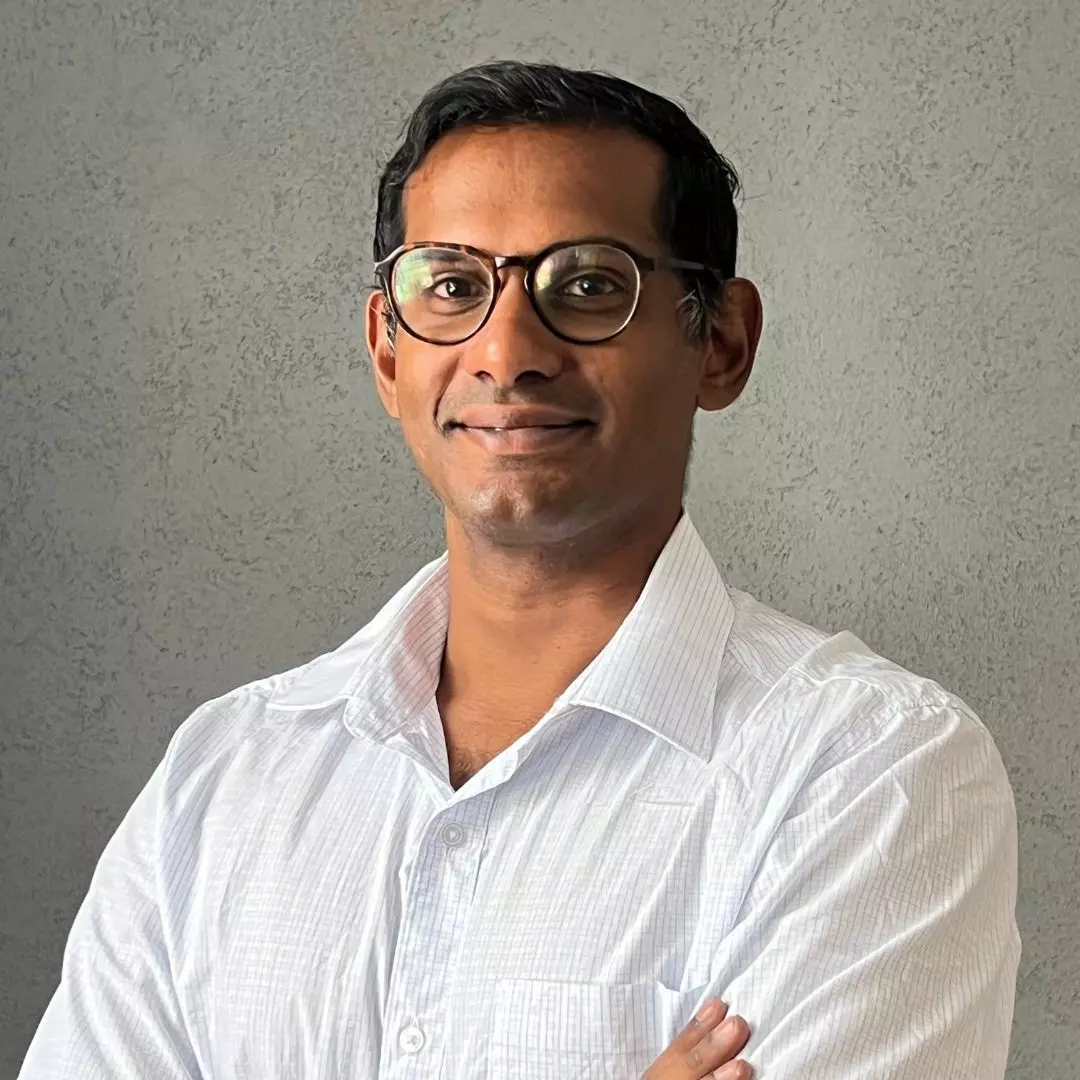
Joshua Thomas is Executive Producer for Podcasts at The Core. With over 5 years producing daily news podcasts, his previous work includes setting up the podcast department and production pipeline for The Indian Express (on podcast shows 3 Things, Express Sports and the Sandip Roy Show to name a few) as well as for Times Internet (The Times Of India Podcast). In his spare time he teaches, produces and performs live coded Algorave music using Sonic Pi.


